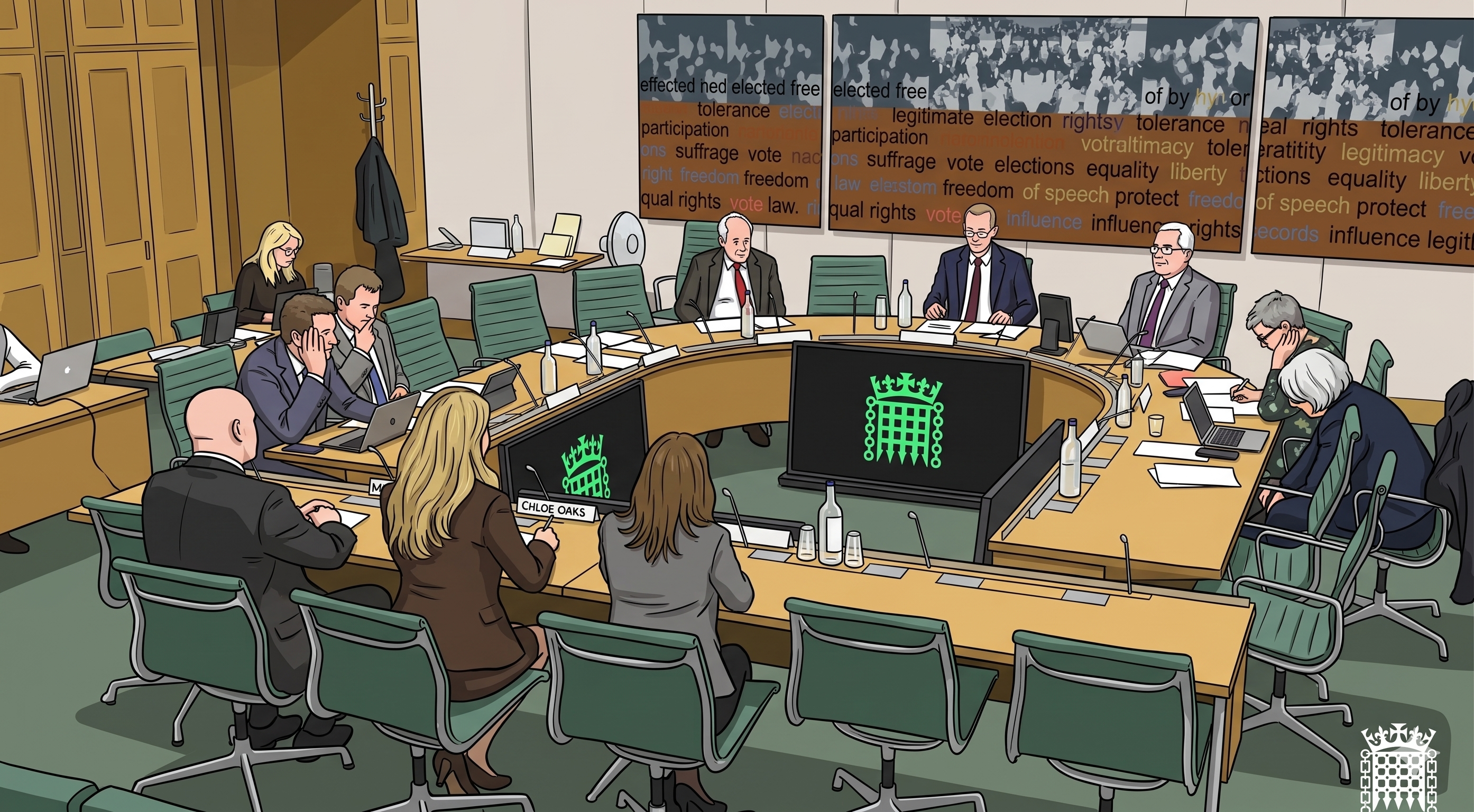
There are 3 types of parliamentary committee in the UK:
These are long-term committees that investigate and scrutinise
subjects/departments/policies, via:
-
Holding private meetings (where they choose inquiries, discuss evidence,
and make decisions).
-
Holding public oral-evidence sessions (where they question ministers,
officials, experts, etc.)
Click me
-
Receiving written evidence (from organisations / individuals who have been
invited to write).
-
Making reports/recommendations (after deliberating privately) which the
government often responds to.
-
Correspondence (ie. having back-and-forth exchanges with
ministers/departments/companies/regulators).
- Fact-finding visits, public engagement (eg. surveys).
These are
commons-only committees set up to deal with a specific item of business/legislation,
with membership appointed for that particular task.
This is an exhaustive list of the different types of general committees:
-
Public Bill Committees (examine
Bills
line by line)
-
Delegated Legislation Committees
-
Second Reading Committees
-
Committees to consider Bills on Report
-
Commons Grand Committees
-
Scottish Grand Committee
-
Welsh Grand Committee
-
Northern Ireland Grand Committee
-
Regional Affairs Committee
-
European Committees
This is an alternative debating forum for the
House of Lords
where Bills are scrutinised in detail line-by-line (but no formal votes are
taken — decisions must be unanimous).